Home›Pricing›Three ways to play
For the hostThree ways to play every case.
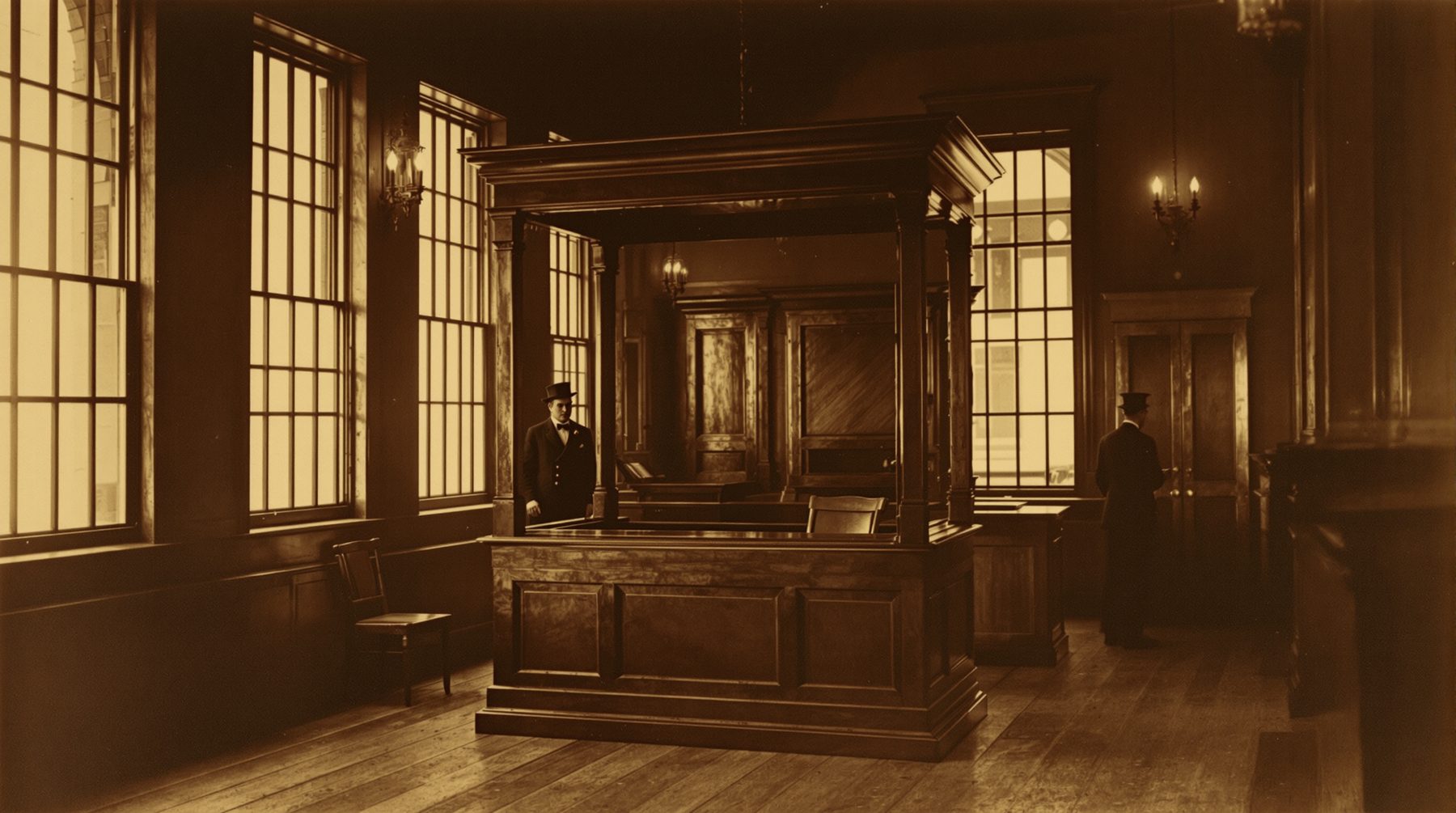
Every party case can end at the reveal, as it always has. Or it can go to trial: the person your table accused stands in the dock, your guests become the jury, and nobody learns who really did it until the verdict is in.
The Party is the case as you know it: work out the killer, vote, reveal. The same-night trial holds the reveal back and puts the accused straight into the dock for about an hour in court. The Full Case ends the party on the vote, with the name sealed, and brings everyone back on a second night as the jury for the full trial.
No reveal before a trial.
If your game goes on to trial, there is no reveal at the party. Not on the same night and not before a second night. The party stops at the vote. Nobody at the table learns who did it until the jury's verdict is in. Then the party's own reveal plays, followed by what truly happened for the verdict you gave.
That is what keeps the trial a mystery. Your table does not know whether it named the killer. The jury weighs the evidence without the answer, as a real jury would, and a room that convicts an innocent person finds out at the very end.
Pick before the night.
The Party
Six to twelve guests play the suspects, you play the victim, and the case runs from the app over two to three hours with dinner. The table works out the killer, votes, and sees the reveal. Everything a murder mystery party has always been.
Party + Same-Night Trial
The party runs as normal up to the vote, and the reveal is held back. The person your table named goes straight into the dock. Everyone else steps out of character and into the jury box. About an hour in court, with fewer witnesses and one round of deliberation. Then the verdict, then the reveal.
The Full Case
The party ends on the vote, with the name your table chose sealed. On a later night the same guests come back, not as suspects this time but as the jury, for the full trial. The reveal plays only after their verdict. The same-night version is included too, if you change your mind.
The host, the guests, the accused.
| The Party | Same-night trial | Second night | |
|---|---|---|---|
| The host | Plays the victim, while the app runs the evening. | Reads the short bridge from the vote into court, then keeps the room as foreperson: holds the remote and calls the votes. | Brings everyone back, and runs the court as foreperson. |
| The guests | Play the suspects, question each other, and vote. | Step out of their characters and into the jury box. | Come back as the jury. They may recognise the people in the witness box. |
| The accused | Plays their suspect like everyone else, until the vote names them. | Stays in character, sits in the dock rather than the jury box, and may speak for themselves from it. | Sits in the dock, in character, for the full trial. |
| The reveal | After the vote. | After the verdict. | After the verdict, on the second night. |
Nobody plays the judge or the barristers. They are narration, portraits and text on the screen, and the judge explains the law in plain English before the jury retires.
Right or wrong, you do not know yet.
The trial follows your table's vote, so every case is written for whoever your table might accuse. The jury never knows which of these it is in until the end.
Can it be proved?
The party was solved from things a court will not hear: private notes, gossip, a remark made in passing. The Crown has to build its case from what witnesses will swear to and what the documents show. The honest verdict may be guilty, guilty of something less, or, where the proof genuinely fails, not guilty.
Can you undo it?
The Crown's case is built from the very evidence that persuaded your table, so it looks strong, because you believed it yourselves. The defence is built from the fair clues, which point elsewhere. The honest verdict is not guilty, and the reveal names who really did it.
Per case, in Australian dollars.
- The party case, hosted from the app
- Six to twelve guests, plus you
- The printable pack included
- Vote, then the reveal
- The whole party, up to the vote
- About an hour in court the same night
- The accused's player speaks from the dock
- The reveal only after your verdict
- The party, ending on the vote
- The full trial on a second night
- The same-night trial included too
- Already bought the party? Upgrade for $21
Released case by case, starting with The Masque at Carfax. A case sells its trial only when that trial is written, checked and playable in the app. Until then its page says the trial is coming, and you are never charged for a trial that is not ready.
The trials, answered.
Why is there no reveal if we go to trial?
Because the trial is only a whodunit while the jury does not know the answer. If the table saw the reveal first, the court would be a formality. Held back, the room genuinely does not know whether it accused the killer, and a table that convicts an innocent person finds out at the very end.
What if our table accuses the wrong person?
The trial still plays, with that person in the dock. The Crown's case is built from the same evidence that persuaded your table, so it looks strong. The honest verdict is not guilty, and the reveal at the end names who really did it.
What if we accuse the right person?
Then the question becomes whether it can be proved in court, to the standard the law requires, from evidence a court would actually hear. Much of what a party relies on, private notes, gossip, things said in passing, would not be heard. The honest verdict may be guilty, guilty of something less, or not guilty.
Does the accused's player have to act?
No more than at the party. They stay in character in the dock and may speak for themselves from it, as the law of the period allowed. Nobody plays the judge or the barristers: those are narration, portraits and text on the screen.
I have already bought the party. Can we still have the trial?
Yes. When that case's trial is released, a $39 party can be upgraded to the Full Case for $21. The trial works best when your table has not yet seen the reveal, so if you think your guests may want a trial, decide before the night.
When can I buy a trial?
Not yet. The trials are released case by case, starting with The Masque at Carfax. Each case page says when its trial is ready, and no money is taken for a trial that cannot be played.
Are the trials of the eight real cases real history?
No. The Case Files reopen real crimes, but their trials are invented alternative endings, and each one is labelled as such.
Can we play a trial without the party?
Yes. Every party case's trial is also a standalone jury case, alongside six original trials, in Jury Duty. With no party first, the Crown has charged one of the suspects and the jury does not know if it is the right person.
Want only the courtroom? Every trial is also a standalone jury case in Jury Duty, with six original trials beside them.
Be told when the first trial opens.
Leave your email and we will write when The Masque at Carfax goes to trial, and not before.
Nothing is on sale yet and nothing is charged. One email when it is ready, unsubscribe whenever. We handle your address as set out in our privacy policy.